logo
अच्छा मूल्य  ऑनलाइन

उत्पादों का विवरण

घर > उत्पादों >
परिरक्षित सेंसर केबल
>
Custom Flexible Robot Cable Hybrid Double Screened Cable

Custom Flexible Robot Cable Hybrid Double Screened Cable

ब्रांड नाम: DINGZUN
मॉडल नंबर: डी358
MOQ: 200 मीटर
कीमत: बातचीत योग्य
पैकेजिंग विवरण: कार्टन पैकिंग / ड्रम पैकिंग
भुगतान की शर्तें: टी/टी
विस्तृत जानकारी
उत्पत्ति के प्लेस:
चीन
प्रमाणन:
CE CCC REACH ISO9001
केबल प्रकार:
उच्च लचीलापन रोबोट केबल
केबल स्पेक:
मल्टीकोर + मल्टीपेयर + मल्टीट्रायड + मल्टीक्वाड
कंडक्टर:
टीसी (सीयू/टीसी/एसपीसी/एनपीसी वैकल्पिक) बारीक फंसे वर्ग 5 (कक्षा 1/2/5/6 वैकल्पिक)
इन्सुलेशन:
सिलिकॉन लचीला यौगिक (पीवीसी/एक्सएलपीई/एफईपी वैकल्पिक)
स्क्रीन:
प्रत्येक जोड़ी के लिए अलग-अलग अलु फ़ॉइल और समग्र टीसी ब्रेडिंग
कवच:
निहत्थे (एसडब्ल्यूए/जीएसटीए वैकल्पिक)
म्यान:
सिलिकॉन लचीला यौगिक काला (टीपीवी/एफईपी/पीएफए/एलएसजेडएच वैकल्पिक)
आवेदन:
रोबोटिक्स
आपूर्ति की क्षमता:
10000 मीटर/दिन
उत्पाद वर्णन

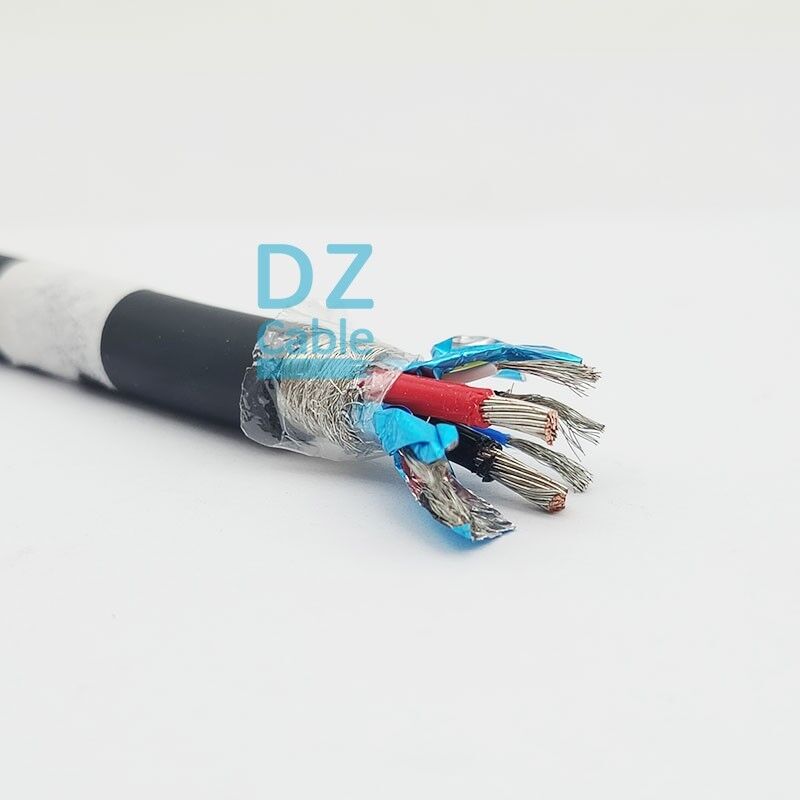
Custom Flexible Robot Cable – Hybrid Double Screened Cable, Conductor: TC (CU / TC / SPC / NPC Optional) Finely Stranded Class 5 (Class 1 / 2 / 5 / 6 Optional), Insulation: Silicone Flexible Compound (XLPE / FEP Optional), Screen: Individual Aluminium Foil for Each Pair + Overall TCWB Tinned Copper Wire Braiding, Sheath: Silicone Flexible Compound Black (TPV / FEP / LSZH Optional), Application: Robot Cable

This custom flexible robot cable features hybrid double screened construction, specifically engineered for demanding robotic and automation applications requiring exceptional flexibility, reliable signal integrity, and robust EMI protection in continuous motion environments.

The conductor options provide design flexibility: CU for general use, TC for corrosion resistance, SPC for high frequency and high temperature, or NPC for extreme temperature oxidation resistance. Finely stranded Class 5 construction offers optimal flexibility for robotic applications, with Class 6 available for maximum flexibility, or Class 1/2 for fixed installations. Silicone flexible compound insulation delivers outstanding thermal stability, flexibility, and low outgassing, with XLPE or FEP options for enhanced electrical or temperature performance.

The double screen system combines individual aluminium foil shielding on each pair to eliminate crosstalk between adjacent signal pairs, with overall TCWB tinned copper wire braiding providing comprehensive external EMI protection for the entire cable assembly. The black silicone flexible compound sheath offers exceptional flexibility, durability, and wide temperature range performance, with TPV, FEP, or LSZH options available for specific environmental requirements.

This highly customizable robot cable platform adapts to virtually any robotic application, from small pick-and-place robots to large industrial articulated arms, ensuring reliable power, control, and data transmission in continuous flexing environments.

Custom Flexible Robot Cable Hybrid Double Screened Cable 0

Key Features & Technical Advantages

  • Hybrid double screened for maximum EMI protection

  • Conductor options: CU / TC / SPC / NPC to match application requirements

  • Class options: 1, 2, 5, 6 for flexibility from static to continuous flexing

  • Insulation options: Silicone / XLPE / FEP for temperature and electrical optimization

  • Individual foil shielding per pair eliminates crosstalk

  • Overall TCWB braid screen for external EMI protection

  • Sheath options: Silicone / TPV / FEP / LSZH for environmental optimization

  • Designed for continuous flexing robotic applications

Specifications & Construction


Parameter Details
Type Custom flexible robot hybrid double screened cable
Conductor Options CU / TC / SPC / NPC
Conductor Class Options Class 1 / 2 / 5 / 6
Insulation Options Silicone / XLPE / FEP
Individual Screen Aluminium foil per pair
Overall Screen TCWB tinned copper wire braiding
Sheath Options Silicone / TPV / FEP / LSZH
Application Robot cable, automation, continuous flexing

Why Choose This Custom Robot Cable Platform

This highly customizable robot cable platform provides engineers with the flexibility to select the exact materials and construction for their specific robotic application. Conductor material, stranding class, insulation type, and sheath material can all be optimized for the required flexibility, temperature range, chemical exposure, and electrical performance. The double screen system ensures signal integrity in electrically noisy automation environments.

Typical Applications – Solving Critical Robotic Challenges

  • Industrial Articulated Robots: Provides continuous flex cabling for 6-axis robot arms with power, control, and feedback signals

  • Collaborative Robots (Cobots): Delivers flexible, safe cabling for human-interactive robotic systems

  • Pick-and-Place Robots: Enables high-speed, continuous flex connections for packaging and assembly automation

  • SCARA Robots: Supplies reliable cabling for selective compliance assembly robot arms

  • Delta Robots: Provides high-flex cabling for high-speed parallel link robots in food and pharmaceutical packaging

  • Automated Guided Vehicles (AGVs): Delivers durable, flexible cabling for mobile robot navigation and control

  • Medical Robotics: Supplies low outgassing, sterilizable cabling for surgical and rehabilitation robots

Frequently Asked Questions

Q1: What conductor material should I choose for my robot application?

A: CU for general use, TC for corrosion resistance, SPC for high frequency/high temperature, NPC for extreme temperature oxidation resistance.

Q2: What conductor class provides maximum flexibility for continuous flexing?

A: Class 6 provides ultra-fine stranding for maximum flexibility and longest flex life in continuous motion applications.

Q3: What insulation is best for high temperature robotic environments?

A: Silicone offers flexibility from -60°C to +200°C; FEP offers 200°C+ with chemical resistance; XLPE offers excellent electrical properties.

Q4: Why is double screening important for robot cables?

A: Individual pair shielding eliminates crosstalk between sensitive signals; overall braid protects against external EMI from motors and drives.

Q5: What sheath material is best for robotic applications with oil exposure?

A: TPV and LSZH offer excellent oil resistance; silicone offers wide temperature range and flexibility.